 Feb 04,2026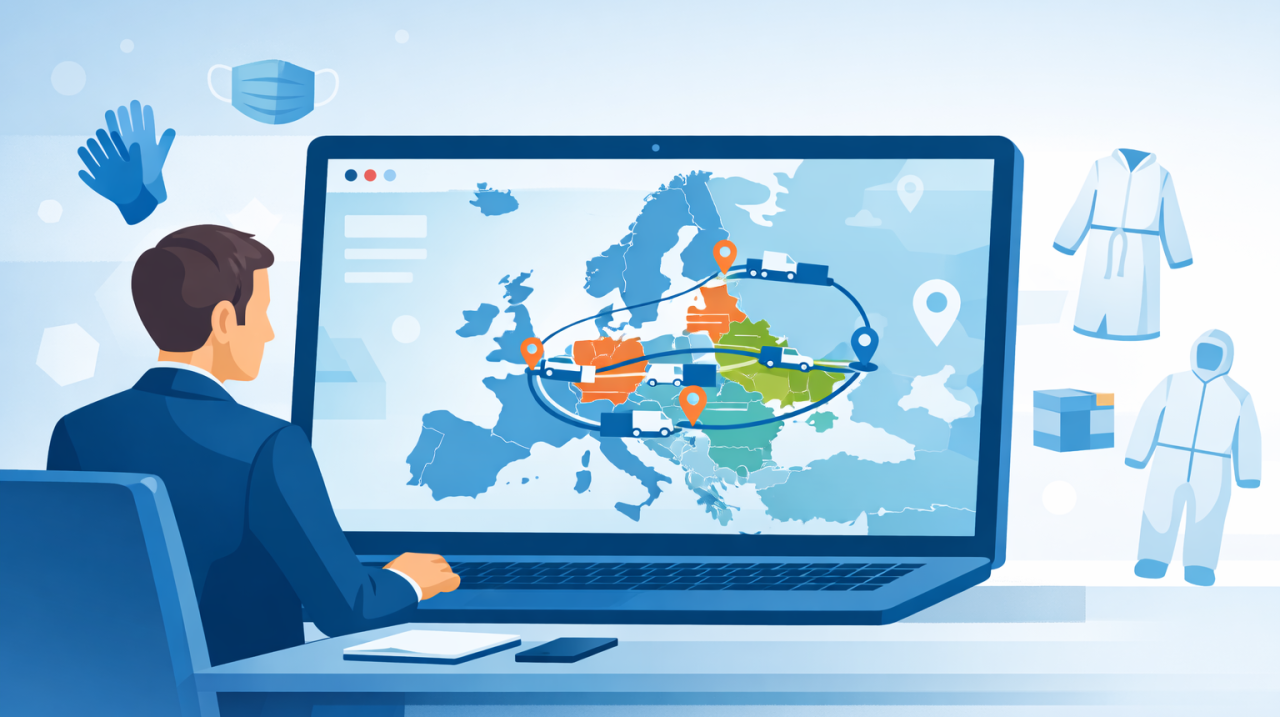
If you are responsible for PPE procurement in Europe, you probably know the pattern: someone raises an urgent request, your inbox explodes, you dig through old supplier lists, and you start calling or emailing factories across multiple countries. Two weeks later you might have a handful of comparable quotes – if you are lucky.
PPE demand has become more volatile and globally interconnected, and Europe still relies heavily on cross‑border flows of masks, gowns, gloves, and protective garments. The result: buyers waste time managing fragmented communication and chasing reliable offers instead of focusing on strategic inventory and risk management.
This guide walks through how to source PPE in Europe more efficiently, what makes cross-border PPE sourcing so complex, and how to redesign the process so you can buy PPE from European suppliers without drowning in manual outreach.
Why Cross‑Border PPE Sourcing in Europe Is So Hard?
1. Language and communication barriers
Europe’s diversity is an asset, but it complicates procurement. Many smaller or mid‑sized PPE manufacturers still handle inquiries in their local language. When you are chasing quotes in German, Polish, Italian, or Spanish, you run into several issues:
Slow, inconsistent responses because messages get stuck with local sales reps.
Misunderstandings around technical specs, Incoterms, and payment conditions.
Difficulty escalating issues when you rely on a single contact window at each supplier.
This fragmentation forces buyers to default to a small set of “comfortable” vendors, even if better options exist elsewhere in the single market.
2. Different standards, same product name
Not all “masks”, “gowns”, or “coveralls” are equal. In the EU, PPE must comply with Regulation (EU) 2016/425 and carry a CE mark, backed by conformity assessment and category‑specific testing. The same product type might be certified:
As Category II PPE for general industrial risks,
Or as Category III PPE for high‑risk, life‑threatening environments.
On top of that, different EN standards apply to apparently similar products (for example, EN 149 vs EN 14683, or different EN ISO standards for chemical protective clothing). When you buy across borders, you need to be certain that:
The certificate actually matches the intended use.
The notified body number is valid and traceable.
Documentation is complete and current, not expired or generic.
Verifying all of this manually, supplier by supplier, becomes a serious bottleneck.
3. Transport costs and lead times across Europe
Even inside the EU, logistics can make or break a PPE deal. Transport cost and transit time depend on:
Shipping lane: e.g. Eastern Europe to Western Europe vs intra‑DACH.
Shipment size: parcel, palletized LTL, or full truckload.
Special handling: temperature control or dangerous‑goods requirements for certain items.
In periods of disruption-such as pandemics or regional shocks-costs and lead times can swing suddenly. A quote that looks attractive on unit price can become uncompetitive once you factor in:
Last‑mile delivery to multiple sites.
Customs procedures when sourcing from outside the EU/EEA.
Rush surcharges when you need urgent replenishments.
Without a structured way to compare total landed cost, buyers end up overpaying or accepting unreliable lead times.
4. Hidden intermediaries and opaque pricing
Many buyers think they are dealing directly with factories when they are actually working through:
Trading companies,
Unofficial brokers,
Or multi‑layer distributor chains.
This adds margin at every step and creates risks:
Less transparency on where and how products are made.
Weaker control over quality and certifications.
Limited recourse if something goes wrong, because the real manufacturer is several steps away.
In a stressed market, this opacity contributed to quality problems and unusable PPE shipments in several EU countries during the pandemic. The challenge is not only to find offers, but to ensure that offers come from verified, traceable sources.
How Traxfair Simplifies Cross‑Border PPE Sourcing?
Traxfair was designed around the exact pain points described above: fragmented communication, inconsistent specs, and lack of visibility across requests, offers, and orders.
1. One place for all PPE requests
Instead of starting a new email thread every time someone needs PPE, buyers and internal stakeholders submit their requests directly into Traxfair:
Requests are standardized and validated so suppliers receive clear, complete specifications.
You can track all open and past requests in one dashboard.
Approval workflows ensure that only vetted requests go to the market.
This turns ad‑hoc demand into a structured pipeline that is much easier to prioritize and manage.
2. Managed supplier sourcing and comparable offers
With Traxfair, you do not need to manually email or call dozens of suppliers across Europe. The platform:
Routes standardized requests to verified PPE manufacturers and distributors.
Helps you collect offers in a consistent, comparable format.
Keeps communication with suppliers organized under each request, instead of scattered across inboxes.
Your procurement team can then review and compare offers internally-by unit price, certifications, lead time, and logistics options—before presenting final proposals to internal clients or external buyers.
3. End‑to‑end visibility and logistics coordination
Traditional PPE purchasing often stops at “order placed”, leaving logistics to scramble. Traxfair extends visibility from request to delivery:
Milestones and alerts for approvals, offer readiness, order confirmations, and shipments.
A clear overview of which supplier is delivering what, to which destination, and when.
The ability to coordinate and track logistics centrally, rather than handling shipping details separately with each supplier.
For cross-border PPE sourcing, this means you have a single source of truth for all in‑transit orders and can spot bottlenecks early instead of discovering them when stockouts hit.
4. Less dependence on hidden intermediaries
Because Traxfair connects buyers with verified manufacturers and structured intermediaries, it reduces the reliance on opaque broker chains:
Supplier identities, certifications, and capabilities are transparent.
Communication is logged and auditable.
Performance data over time (on‑time delivery, quality incidents, conversion rates) helps you refine your supplier pool.
This transparency helps you buy PPE from European suppliers with greater confidence, knowing who actually produces or legally represents the goods you are purchasing.
Putting It All Together: From Firefighting to a Repeatable Sourcing Process
To move away from weeks of emails and calls, and toward a more efficient way to source PPE in Europe, combine process discipline with the right tooling:
Define and standardize your PPE specifications so suppliers across countries see the same, clear requirements.
Build a pan‑European supplier pool with verified certifications and risk categories.
Evaluate offers on total landed cost and risk, not just unit price.
Centralize communication, approvals, and logistics tracking in a single workflow instead of letting everything live in personal inboxes.
Use a platform like Traxfair to make cross‑border requests, offer comparison, and order execution part of one continuous, auditable process.
When these elements are in place, cross-border PPE sourcing stops being a constant scramble and becomes a manageable, data‑driven operation.